How does the One Big Beautiful Bill affect you as a self-employed individual? We’ll explore the tax implications of OBBBA and give you some tips on adjusting your income/expenses.
One Big Beautiful Bill Act (OBBBA) Changes
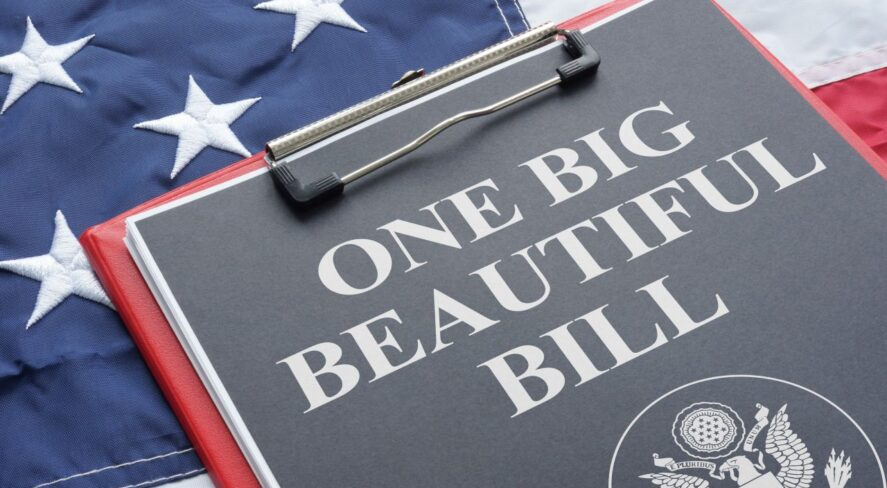
The One Big Beautiful Bill Act (OBBBA) was certainly a hot topic back when America was heading into its July 4th celebration of 2025 – which was already half a year ago! It passed with a narrow majority and provided sweeping tax overhaul. Here are the key changes of OBBBA:
- Increased standard deductions and child tax credit
- No tax on tips & no tax on overtime pay deductions
- Higher State And Local Tax deductions (SALT): up to $40,000 vs. $10,000 cap in prior year
- Enhanced deductions for seniors (65+)
- Brand new car loan interest deduction
- No more clean vehicle tax credit after Sep 30, 2025
For businesses, here are a few key changes:
- QBI is made permanent and enhanced
- 100% bonus depreciation is brought back and made permanent
- Section 179 expensing limits are increased
=> This helps small creators & businesses upgrade equipment and deduct it immediately
- R&D costs can be fully expensed in the year incurred
- Higher reporting threshold for 1099(s) so third-party & independent contractor payments are adjusted upward
=> Fewer small-payment reporting hassles for creators and gig-workers
Self-Employed Tax Overview

So you started your own business? Congratulations! Whether you opened your own shop, bakery, started livestreaming, or started your own YouTube channel, congratulations on taking the first step towards financial freedom! 90% of America’s businesses are small businesses, so you really are the backbone of the entire nation’s economy!
Here are some key takeaway points for the self-employment taxes:
- If you’re self-employed, you’re responsible for paying both the employer and employee portions of your Social Security and Medicare tax—a total of 15.3 percent on 92.35 percent of your net earnings from self-employment.
- Use Schedule SE to calculate your self-employment tax. Report the tax amount from Schedule SE in the “Other Taxes” section of Form 1040.
- When calculating your self-employment income, you are allowed to subtract half of your self-employment tax from your income before applying the tax rate.
- If you owe $1,000 or more in federal taxes for the tax year, you may need to make estimated quarterly tax payments using Form 1040-ES.
- Reporting requirement: as a self-employed individual, you are most likely reporting your income & expenses in connection with your business on Schedule C. Note that if your business made $400 or more you will be subject to the self-employment tax/.
- You can claim 50% of what you pay in self-employment tax as an income tax deduction. For example, a $1,000 self-employment tax payment reduces taxable income by $500. In the 25 percent tax bracket, that saves you $125 in income taxes. This deduction is an adjustment to income claimed on Form 1040, and is available whether or not you itemize deductions.
Some changes due to OBBBA for businesses you may want to know as a business owner:
- The famous QBI deduction has now been made permanent! Previously, the 20% write‑off for sole proprietors, partnerships, and S‑corps was scheduled to vanish after the 2025 tax year, but the Act erases that sunset clause entirely. In addition to making the break permanent, Congress added a $400 “micro‑business floor,” so even owners with only a few thousand dollars of profit still get some benefit.
- Another return is celebrated: the bonus depreciation is back! Previously, bonus depreciation had been phasing down, 80% in 2025, 60% in 2026, and so on, until Congress slammed on the brakes and reset the rate to a full 100%. The rule generally applies to original-use assets, but may apply to some purchases that meet certain requirements.
Unlike Section 179, there’s no annual dollar cap or business‑income limit; if you want to wipe out every penny of profit with equipment purchases, you can. So, if you’ve been making good money with your content this year, and you’ve had an eye on that fancy new camera rig setup for a while, it might be a good time to just go ahead and buy it 🙂
- Section 179 expensing limit has been raised significantly with OBBBA. The Act doubles the annual cap from $1 million to $2.5 million, and the phase‑out doesn’t begin until total equipment purchases hit $4 million. Both figures are indexed for inflation going forward.
Unlike bonus depreciation, you must have enough taxable business income to cover a 179 election, but you decide exactly how big that election is. This flexibility is perfect when you want to drive taxable income to zero, but not into a loss that might limit other credits or affect loan covenants.